
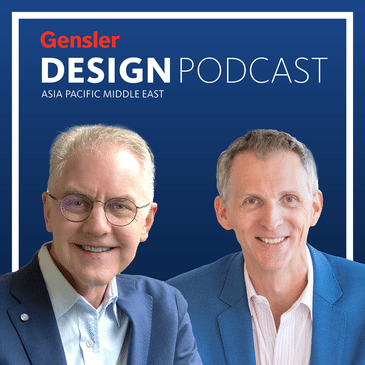
Over the past 18 months, a resurgence in both domestic and international travel has been observed, marked by a notable increase in both business trips and leisure travel. The hospitality sector, intricately linked to the evolving expectations of consumers, is experiencing a profound transformation driven by various factors, including shifting consumer preferences, technological advancements, and a heightened emphasis on wellness. Join our host, David Calkins, and our guest, Kirk Ellis, Director of Hospitality for Gensler’s Asia Pacific region, as they explore the transformative journey of the hospitality sector and examine how hotels and related establishments are adapting in response.
[00:00:00] Welcome to the Gensler Design Podcast. The Gensler Design Podcast creates a dialogue between
[00:00:14] design experts, creative trend centers and thought leaders to discuss how we can shape
[00:00:18] the future of cities through the power of design. I'm your host David Cochans, the Regional
[00:00:22] Managing Principal of Gensler's Asia Pacific and Middle East region.
[00:00:28] In the past 18 months, we witnessed an extraordinary resurgence in both domestic and international
[00:00:32] travel. Business trips and leisure adventures are on the rise as consumer expectations evolve.
[00:00:39] As a result, the hospitality sector is experiencing a profound shift propelled by changing
[00:00:44] consumer preferences, technological progress, and a growing emphasis on wellness. This evolution
[00:00:50] necessitates that hotels and related establishments proactively anticipate and respond to these
[00:00:55] shifts to meet the expectations of today's discerning guests. To help us dissect these trends and
[00:01:00] understand their implications, I'm glad to have Kirk Ellis with us. Kirk is Gensler APME's Director
[00:01:06] of Hospitality and he brings a wealth of experience and expertise to the conversation. Hey, Kirk,
[00:01:11] are you today? Hey David, I'm great. Thanks. Always good to talk with you. We see each other all
[00:01:16] the time in the office, but it's always good to talk with you in this format too. Well, it's great to
[00:01:20] have you on the podcast. You're based in Singapore like I am and you're a hospitality pro. So you've
[00:01:26] been in the industry for a long time, have designed a whole wide variety of facilities for hospitality
[00:01:32] and in various locations around the world. Can you give us a little bit of a snapshot of your
[00:01:37] background and also talk about your connections to Asia? Sure. David, I feel really fortunate.
[00:01:42] I've spent 30 years working in hospitality design and really that was my first job out of
[00:01:46] university. We're just looking for a job, had a connection. It happened to be a person who was
[00:01:50] designing resorts mostly in Asia, but he was based in the Los Angeles area where I grew up,
[00:01:56] just super fortunate. And when I got in is a fresh graduate junior junior architect,
[00:02:02] I started learning about this fantastic complex relationship between a guest experience, especially
[00:02:07] in resorts, the operation of the hotel. Yet we as architects designers, we've got to make this
[00:02:12] all come together and I was bitten by the bug then. So I was no going back. I've really,
[00:02:17] really enjoyed all my time in the industry. Yeah, that's my basic background, my connection to Asia.
[00:02:22] I started coming to Asia first in 2010. And that fit me well because just having grown up in the US,
[00:02:28] I was always looking for other cultural experiences. And so I lived in Shanghai, I lived in Bangkok
[00:02:35] and I'm now in Singapore. I think for me what's been very fortunate too is that the opportunity,
[00:02:40] it's a very fresh look at what's going on. Europe, North America are pretty mature markets and
[00:02:45] there's just so much going on. So I've been really happy to be working in Asia for quite some while now.
[00:02:50] So you talked about a lot going on in the industry. Could you talk specifically about
[00:02:54] what the changes have been in the last five years let's say? Obviously a lot of things in the
[00:02:59] world have happened since then but what are you seeing in the hospitality industry across our region?
[00:03:05] Sure, I design buildings and actually I oversee the integration of designs of different
[00:03:09] consultants plus our own teams. But I've always enjoyed focusing on the operations business side of what
[00:03:15] our clients, the developer or the hotel, yeah, what they're looking at. And I've always found that to be
[00:03:20] fascinating just personally professionally but actually I believe helps us to design better. So
[00:03:24] I'm going to answer that question by what I've been hearing from them the past five years pre
[00:03:29] during in post-COVID. First of all, the hotel part of the hospitality industry is pretty slow
[00:03:35] changing the slow evolving industry. It's kind of like the big freighter ship. That's because there's
[00:03:40] so much complexity in each hotel building, there's so much investment and those buildings last a long
[00:03:45] time that it has to be a little bit foolproof or future proof. So not a whole lot of revolution
[00:03:50] changes what did change through COVID in Asia. The sales and expectation of different markets. So
[00:03:57] Chinese tourism we all know up huge in Southeast Asia pulled back during COVID coming back now.
[00:04:03] But on the economics sales and how they operate the hotel, they've kind of countered that.
[00:04:08] That's what I'll be confident to talk about we figured out how to work around this. So for us as
[00:04:13] designers there's not a huge impact in that. I think where we start to see an impact is people
[00:04:18] absolutely are looking for experiences. They're and that's the experience economy which we've
[00:04:23] known about for quite a long time. They grew out of retail. In that the guest room is still the guest room
[00:04:28] your bed your good shower your comfortable bedding etc so that's always going to be foundational.
[00:04:33] I think the changes that are just actually starting to come about which is the exciting part is F&B
[00:04:38] food and beverage is really going to be changing because in this day of depends on your region if it's
[00:04:43] door dash or Uber Eats or wherever you live those services now can deliver any meal into the hotel.
[00:04:50] And this is actually a point that the CEO of Accord the big French company Sebastian Bezé made
[00:04:56] in a conference last year of hotel investment people's like we gotta we keep rethinking this so
[00:05:01] there's some exciting things that are opening up and that's some of the growth that's coming but
[00:05:05] this the the foundational parts of a hotel a good room good lobby experience mediums when it's
[00:05:11] needed in the market those are still yeah I'm going to remain there. Talking about the future
[00:05:15] looking forward what strategies can designers use to influence the future of hospitality experiences
[00:05:21] as we move forward? I think you know when we work with clients again because the architecture part
[00:05:26] of a hotel is such a long-term bill we're thinking 40 years in the future. The guest room we have to
[00:05:32] kind of commit to something very early on and there's a lot of variety we could do for the guestroom
[00:05:37] part but there's just a lot of opportunity or risk taking and doing that so let's kind of put the
[00:05:41] guestroom part aside for then as designers a mixed use hotel what's really embedded with other
[00:05:47] services around it's retail its office it's good public place that's really where the the fund
[00:05:53] the magic is now on the investment side when I keep paying for more clients is this mixed use
[00:05:57] project sometimes can be better to have carry the costs of the hotel which is expensive to build
[00:06:03] or which we again are doing quite a lot of now including Brenner residential Brenner residential
[00:06:08] is just taking off as a part of the industry it's valued by the guest it's valued by people to own
[00:06:14] something it's branded it's valued by the operators to say we have another vehicle to sell a room
[00:06:19] night to an experience to a guest so as designers and that gives us another chance to help to really
[00:06:25] knit more opportunities into each hotel property I've noticed it seems like the trend is toward
[00:06:32] personalization in terms of what the brands are doing and it seems like technology is being leveraged
[00:06:38] to achieve some of that how are hotels leveraging data and technology to craft these tailored
[00:06:44] experiences for the individual guests yes again I'm going to answer it in two different channels one
[00:06:50] what I hear from our clients people who are in the industry the pre sales pre-marketing during
[00:06:57] your experience and post-experience that loyalty is really really important you know that's why
[00:07:02] Barrett has more than 30 brands held in a core they're actually looking for that brand loyalty
[00:07:06] that people stay in their system and they've been able to really use the fluidity of
[00:07:13] that online marketing and digital and that's just a part of the world we live in for the corner
[00:07:17] stone of a good hotel unless it's truly just businesses you're looking for an experience as
[00:07:21] beyond your daily experience right you get as you just said David you get a nice hotel you want
[00:07:25] to have something feel better than what you have at home but a romantic little aspirational little
[00:07:30] bit maybe educational adventurous and so digital technology how can we embed digital design how can
[00:07:37] we embed crossover events that are cultural events that come to the hotel or vice versa
[00:07:42] that sort of exchange it's really the soft goods part of it it's people in programs
[00:07:47] the key is our buildings have to support those that's where it's still important to make sure
[00:07:51] that the hotel planning and interior design can flex or at least accommodate those things that's
[00:07:56] what I see our our role really being as we go forward I want if you could sort of look at the
[00:08:00] future of hotel staffing I think a shortage of workers is in many industries has been a problem
[00:08:06] worldwide but how do you think technology can help sort of offset or make staffing issues
[00:08:11] these years we go forward yes this is definitely an issue as far as the the pain point of staffing
[00:08:18] is really tough right now in the industry we've expanded the offering to the guest and when we
[00:08:23] design hotels when we're working with that operator brand and developer hopefully the owner we're
[00:08:28] always talking about its opportunities what are your choices for your investment in this which
[00:08:32] you're going to bring to market some guests really want to have that personal experience I've traveled
[00:08:37] long in a different place and I'm an extrovert whatever your your story is so we're just adding
[00:08:41] another channel which is the positive part just like a good lobby design actually allows people
[00:08:46] to kind of choose their level of engagement right some people want to be right in the middle
[00:08:50] everyone needs to see me in my beautiful gown or whatever it is or some people like to tuck away
[00:08:55] and really be off the side and by having that sort of stratification experience now go to public
[00:09:00] spaces go to check an experience go to the online that's only adding to the power of what a hotel can
[00:09:06] provide so as the staffing part it's a great question you brought up because even at this year's
[00:09:10] high cap hotel investment conference Asia Pacific it was talked about that in the crunch that there
[00:09:16] is right now for staffing which does affect us design wise there's really a focus to keep those
[00:09:21] staff forward facing to the guests keep those people facing out so that's a good smile a good helpful
[00:09:27] they're even foresee something coming that's the service level that people need
[00:09:31] to feel like their experience and something different from home and also that's the experience
[00:09:35] level that will keep brand loyalty so we're trying to maximize the back of house side of any
[00:09:40] for sort of efficiencies but everything I hear from all the different operators were not looking
[00:09:44] to minimize the upfront front of house guest engaging side of things in fact that technology is
[00:09:50] going to get freedom up to be a little bit more able to get off the keyboard you've seen front
[00:09:54] desks obviously evolve it's more pod like now some now are just tablet based and that the whole
[00:09:59] reason is how can we engage with you as a fellow traveler whatever unless about like you're going
[00:10:03] to the bank that's worth it and those are all positive changes that we then as designers actually
[00:10:07] end up very specifically supporting well that approach on the basis of the operators makes great
[00:10:13] sense to me I would admit that particularly on business travel I'm a pretty self sufficient
[00:10:17] traveler but it seems like I want to be in touch with a person directly when I've got a problem
[00:10:24] for instance I mean it might be something like my television isn't working in my room you know
[00:10:29] how do I fix that and I freely admit some some of those issues might be user problem but still I
[00:10:33] need to have somebody you know give me sort of an instant lesson I don't necessarily want to go type
[00:10:38] something into a help desk right that's online I want to get it taken care of again to that point
[00:10:43] that's why all the operators are looking at let's keep this forward facing people there and
[00:10:49] that's why since you mentioned this you know staffing challenges post covid especially Southeast Asia
[00:10:54] there's just a staffing crisis not as many people available towards them is coming back as you said for
[00:10:59] sure and so right now there is a huge focus every staff dining area we design now it is a restaurant level
[00:11:07] it's got to have natural light it is meant to feel like a restaurant because all of the operators take
[00:11:11] their staff very seriously it's the number one capital investment beyond the actual building for
[00:11:16] operating costs so therefore we as designers take that very seriously too so really across the world
[00:11:22] and so many different settings we're hearing about AI we're hearing a lot of speculation on
[00:11:26] what AI will do or what it won't do eventually going forward but within the realm of hospitality
[00:11:31] what is the potential of AI as we go into the future so this is less of my expertise I'll answer
[00:11:38] carefully so I don't have anybody who's listening uh you can correct me if you like what's on the
[00:11:43] the how they sell the experience and sell these services of a hotel I think there'll be a lot of
[00:11:49] opportunity to do some probably pre-filtering and figuring out what people's profiles are again
[00:11:54] the soft good side that's probably easy to do the brick and mortar of a hotel whether it's the
[00:11:59] architecture the interior design whatever I think again to digital media and integration some choices
[00:12:05] that we've already seen that change over time that will happen you know people are toyed with the idea
[00:12:09] if we have guest rooms they get set up for a person's preference that's always been this sort of
[00:12:13] hypothetical could we do it it's just too costly to do but I don't see AI changing that it's
[00:12:18] interesting for us as designers also people say ah AI is going to replace some of the functions
[00:12:23] I still believe and the people who work at hoteliers and people working the the brand the operator's
[00:12:30] side too is there's so much complexity to a hotel much like a hospital that AI could do some things
[00:12:35] to make some tasks efficient for us to do studies to evaluate design space layout but that final
[00:12:41] knitting of everything together which goes back to a business plan for the operator the business
[00:12:45] plan of the developer how you selling this hotel in the market that's still got to have that
[00:12:49] human touch to have some nuance to it and so that doesn't yeah it doesn't threaten me I don't feel
[00:12:54] what we're doing well in fact that's our very approach to design technology too within the firm
[00:13:00] human designers are always going to have to lead the process but that our tools our digital tools AI
[00:13:05] tools just help to generate options evaluate them and ultimately help our clients to make better
[00:13:11] decisions right I mean isn't that the approach we take you mentioned the tremendous proliferation
[00:13:17] of brands out there within overall parent companies made it to all staggering almost now when
[00:13:22] you go to some of the different brands websites to see all the different sub brands I imagine that
[00:13:27] there is an amount of rebranding and reflagging of existing facilities out there particularly as
[00:13:34] they're aging and they're needing to be reposition can you talk about innovative approaches
[00:13:38] that we can employ to help these facilities to remain competitive yeah this is another exciting
[00:13:46] evolution for hospitality design and the hospital then the hotel industry a couple of specifics
[00:13:53] yes there's now a lot of specific brands within the Mera family Hilton family Accora etc.
[00:13:59] And there's business reasons behind that again brand loyalty is one of the biggest ones
[00:14:02] keep people in your loyalty program I think the biggest benefit to the gas to the traveler has been
[00:14:09] there's now a huge variety of lifestyle brands select service still traditional luxury brands
[00:14:15] that you would expect a Walder for story of you know even a sofa tell them or modern take but
[00:14:20] you know there's those core brands you know what the DNA is and now with the emergence
[00:14:25] yeah especially the past 10 years but it started more than that is lifestyle brands allow some
[00:14:29] flexibility it benefits the parent company it benefits the traveler too like I want to keep my
[00:14:35] Marriott points being a what this or my Accora points I say let's go with the core and the Ho Chi Minh
[00:14:42] city M gallery hotel heritage building with a great art collection but small guest rooms actually
[00:14:47] that's what I want to stay because I love the feeling and I want to see the art collection that
[00:14:51] happens to be there again we've just given now a whole new opportunity for how guests can experience
[00:14:55] hotels it is a fun challenge for us as designers because within a parent company Accora Hilton
[00:15:02] Merad etc we have to be careful we are stewards of their brand and so when the brand is let's say
[00:15:08] it's double tree by Hilton Hilton doesn't want that design to grow and feel start feeling like
[00:15:13] it's a standard street forward Hilton flag nor they want that to feel designed down to be Mikey
[00:15:19] Hilton Garden in that is a serious responsibility that we as designers bear to make sure we'd live
[00:15:25] in the right product and marketplace so that brand expansion it creates this interesting challenge for
[00:15:30] us and of course then looking laterally to the their competitors how do we make sure that double tree
[00:15:33] by Hilton is positioned better or looking comparable whatever to Accora Merad etc that's that is the
[00:15:39] fun part of what we're doing now with that expansion of brands well correct something that's really
[00:15:44] fundamentally important to Gensler at this moment in time is doing eco-friendly design for our clients
[00:15:51] designing sustainability and resilient new buildings and even repositioning old ones can you talk a
[00:15:57] little bit about what steps hotels are taking to bring sustainable design into their projects yeah
[00:16:04] this is definitely fortunately I'm very happy I've been in this industry for 30 years now in the
[00:16:09] past 10 years it's really taken very seriously by the operators and the investors I'll go back
[00:16:16] to my metaphor of the hotel industry being a slow-moving cargo ship though it is tough to change that
[00:16:22] so let's talk about a couple things that can be done in our being done now so when we look at
[00:16:26] designing a hotel like I said we we're designing things to be 40 years at least of structure so
[00:16:32] that concrete all the embedded carbon approach we have in time in right now we're trying to cut out
[00:16:38] between 8 to 10 percent of concrete and the structural design just guess what never see it
[00:16:43] not for cost reasons just to minimize that impact those are things we're able to do but honestly
[00:16:48] it's it's shaving percentage points off of the whole equation so there's something but
[00:16:53] for hotels the operating expense and operating impact really is water and electricity
[00:16:58] that's still a big thing the water part has been addressed there's much more efficiency in some systems
[00:17:04] which is great that comes from both the operator side but also other consultants again that's
[00:17:09] the beauty of hotel design like when we design a hotel is architects there's 14 15 consultants
[00:17:13] involved they're so complex so one industry mechanical equipment plumbing equipment they might
[00:17:19] be able to make some efficiency changes whereas we as architects can't quite do so much so the water
[00:17:23] part has been changing a little but existing hotels it's tough to change turn that around to electricity
[00:17:29] there actually has been a lot of great changes and this is the integration of new intelligent systems
[00:17:35] for management systems yes this is a cost but once we get into a guest room that is now managing the
[00:17:41] energy in the hotel so for example the new pan pacific on orchard road in Singapore
[00:17:48] great example of when the guest is out of the room the roller blinds go down because obviously
[00:17:53] we have a lot of solar heat gain here in Singapore that then keeps the room a little bit cooler which
[00:17:58] means we're using the AC a little bit less though all those little measures count especially when you
[00:18:02] have a 200 300 room property so those things again incremental improvements but definitely needed
[00:18:09] and those cost was the cost of those room management systems has come down greatly over the years
[00:18:15] those are good things here's the thing that goes back to ESG the thing that we can change much more
[00:18:20] readily now is food waste and how FMB is done so the old days of you know the huge buffet and
[00:18:28] tragically so much food gets thrown out and the operators all know that and there is a
[00:18:33] both social conscious as well as operating cost focused to improve that some brands are on the
[00:18:39] the front edge of the curve some brands or operators are not there yet I think that's for a lot
[00:18:44] of local operators really have to pay attention a lot of local people have thrown hotels we as
[00:18:49] designers it's going to change how we lay out FMB again also it's going to change a bit of the
[00:18:54] back of house so it's all that embedded images into the food that's grown transportation prepped
[00:19:01] cooked scraped and it's out to the trash and that's that cycle that if we can minimize that
[00:19:06] it's going to decrease or have a small impact on sustainable design ESG taking things away from
[00:19:11] the community and being a better neighbor that's the big impact I think it's a real positive
[00:19:17] that is great and even small changes add up to make a big difference so we'll remain committed to
[00:19:23] seeing that our buildings at least do less harm to the environment yeah let me add one more point
[00:19:28] on that again when we go to design how to tell the client which I'm doing many right now in our region
[00:19:34] we approach as being an advocate where the client's advocate it's a huge investment it takes four
[00:19:39] years to design hotel and get it built there's a lot of decision-making that is really forward
[00:19:45] thinking at least predictions are best guesses you know based on some analysis so it takes
[00:19:52] all those different design partners including the operator including the owner to make these
[00:19:57] decisions early if possible and then once a building's built to again circle back with the right
[00:20:01] advocates consultants to look at what can we change and modify it's it's rarely a one channel
[00:20:08] solution like that and that's what I love about the industry it's very complex and interwoven
[00:20:11] but two that's where we in our role as architects and tier designers and planners too really
[00:20:17] can help to guide that process whether it's existing or new build let's pursue that a little bit
[00:20:22] because I mean one of the things I think is great about the way you approach things is you really
[00:20:27] understand the industry you understand what our clients are trying to achieve you know you got an
[00:20:32] eye on trying to keep the first cost of the construction low you're also really trying to
[00:20:37] help the operator enhance revenue over time too but it can't just be about that I mean we as
[00:20:43] designers and being advocates for our clients have to bring in the aesthetic and the functional
[00:20:47] part of things too and you know what's going to make the property delightful in the case of hospitality
[00:20:52] for for people to stay how do you navigate that balancing act and get to some kind of equaler group
[00:20:59] yeah so this is things I've learned from others the core is again as I've said because hotels
[00:21:04] specifically are such big investments they need to generate revenue because they pay back loans
[00:21:10] over a long period of time and that revenue generation is very important but it's tied back to
[00:21:14] a guest experience that guest experiences got to be special unique and competitive in the marketplace
[00:21:20] there's that beautiful you know dichotomy almost of generally revenue off of giving a great experience
[00:21:27] so the focus on the business part I think we as designers inherently anyone in the general
[00:21:32] public would know architects and tier designers we create beautiful spaces that's what people
[00:21:36] assume to be what we do and we do that and we have many beautiful projects what I've heard from hotel
[00:21:42] operators and some owners in the past was that okay it was beautiful I paid for this material
[00:21:48] and it wore out in a year or I paid for this and I never big lobby and it cost a lot to claim
[00:21:54] maintain empty chairs all the time that's where I started to realize oh they just made a huge
[00:21:58] investment and how can we as designers be a little more thoughtful have some perspective into their
[00:22:04] business and that's really where it's just come from so yes it it's absolutely balanced between
[00:22:08] the aesthetic which we're trained to do in university and through our careers but that investment
[00:22:13] part is super important to our clients and if they have a profitable hotel they're going to put
[00:22:21] a lot of that money back into renovations as you talk to the beginning gave about guest experience
[00:22:25] are going to put them into programming so it actually benefits all those travelers in the future to
[00:22:30] the better it performs so it's not a singular focus it's just sometimes that business side of our
[00:22:35] client gets overshadowed with a design design beautiful part and that's why I want to I always
[00:22:40] making sure those scales are balanced in any design meeting we have with clients so if the pandemic
[00:22:46] taught us anything it seems like it's that we can't have economic health in the world unless we
[00:22:52] have human health and so there's a huge focus on wellness even more and more emphasis on that as we
[00:22:58] so sort of go through our daily lives so given everything that we've been through in terms of
[00:23:04] health in the last several years how important is wellness in hospitality settings as we look forward
[00:23:12] yeah I'll answer this in a couple of ways as well what I've learned from our clients and I again
[00:23:17] I really also stayed really close to the operators and brands as I was interested in see how they
[00:23:21] see the upcoming market those changes are really again in the soft goods it's the the systems that
[00:23:26] are there how do we provide something for a guest the opportunity for truly our people focused on
[00:23:32] an experience that's more than just a bed a hot shower in my free meal for breakfast and I'm out
[00:23:37] the door that's definitely coming on the demand side from traveling guests whether it's for leisure
[00:23:43] or for business how that results in design changes it's not really like a tidal wave of change
[00:23:49] so spas being which can add on service to be more wellness focused whether it be yoga whatever bringing
[00:23:56] a rakey people different things that are different offerings if we design a building well we should have
[00:24:02] some flexibility in that space they can mutate over time to provide that new service unless you're
[00:24:07] specific equipment that's needs on the architecture side yeah yeah it's not quite changing as much of
[00:24:12] what we do interior design wise yeah because again all the pieces that go into a space from lighting
[00:24:20] to what we call FF and E furniture fixtures and equipment all those things that people see
[00:24:26] and then integrate with the OS and E operating systems and equipment with the owner provides all
[00:24:30] that has to get knit knit together but we as the interior designers that's starting to change as
[00:24:35] there's different needs but again it's really going to come back to its what the properties offering
[00:24:40] and I think the biggest thing that is changing is as I mentioned before the opportunity and engagement
[00:24:44] with local community connecting people to that authentic experience that's the value part
[00:24:50] that's the value add the people are going to pay for it doesn't have to go back to the bricks and
[00:24:54] mortar electricity lighting air conditioning to make that experience happen that's really where
[00:24:59] the change is coming so beyond hospitality we've witnessed other sectors incorporating
[00:25:04] hospitality elements into into design features how does this impact it overall customer experience
[00:25:10] can you talk about other sort of practice areas that are impacting they're being impacted by
[00:25:14] hospitality design yeah and this is actually one of the really I think fun exciting changes in
[00:25:21] built environment supporting people societies groups activities is that hospitality sensibility
[00:25:28] is bleeding out into other built environments and it's doing that for a good reason hospitality
[00:25:34] hotels restaurants clubs bars conference that it's always been something people have expectations
[00:25:40] it's got to be something special good it's also about the service that comes with it really our
[00:25:45] buildings are the backdrop that the service that's provided is really what the guest is engaging with
[00:25:49] people like I have such a good feeling here and yet I hate my experience at the bank for example or
[00:25:53] wherever it was a natural for that to bleed over because it doesn't take too much but it does take
[00:25:58] someone and we as interior designers and architects for hospitality there's certain kind of rules
[00:26:05] of thumb that will always look at and say oh we always should be doing this the seating is a great
[00:26:09] example right we're doing this a lot right now in southeast Asia in a high net worth banking
[00:26:15] situations basically the service is just having a lobby with a few chairs how can we provide
[00:26:20] a good tea for a person how can we provide a light snack for a person how is that delivered how
[00:26:25] is it recovered taken back out fresh cut flowers you know all those different layers that's normal
[00:26:30] for a hotel designer to look at it's not hard to add them into those spaces but it does take that
[00:26:36] thoughtfulness and that thoughtfulness is we're creating an ambiance for someone to come into
[00:26:41] that's meant to be enveloping and meant to be different from their daily routine that's
[00:26:45] absolutely essence of hospitality it has to engage and integrate that service component when we do
[00:26:50] that then in these different settings it does bring them to life I think this is super exciting because
[00:26:55] it's a natural thing it's only making people's lives better and for us as a design firm because we
[00:27:01] do have these different expertise we are experts in banking types of in office types of environments
[00:27:05] and healthcare etc when we can cross pollinate those things it just makes all those experiences
[00:27:12] for the end user so much better because we're really good at all those different components
[00:27:17] but I'm really proud of that actually the way to do that yeah I mean you're in high design these days
[00:27:21] you and your approach to things and so and I think it's right and it's only helping improve the
[00:27:27] experience every day experience for people who are using building using the spaces that we design
[00:27:33] looking ahead you all are always looking ahead he talked a little bit about a few things in
[00:27:38] the future but what do you see over some of the factors that are going to shape the future of
[00:27:42] the hospitality industry as we go into the next decade or so oh boy okay so my crystal ball is
[00:27:48] smaller than others but I'm going to give it my best shot and I'll all answer that as a designer who
[00:27:53] pays attention to the the business side of what our clients are doing a good hotel will always
[00:27:58] need to have that the basics I think the efficiency of space uses space is becoming more critical
[00:28:04] therefore over building some properties is becoming less palatable that's a positive use less
[00:28:09] equipment use less materials use less energy to cool the building so that's one change it's going
[00:28:16] to be coming like I said the the FMB changes they're going to be coming I think that's exciting especially
[00:28:20] in Asia Pacific there's just so much food oriented parts of life right it's so much and to have
[00:28:26] that how it's going to engage and connect and draw people in draw people out that's also so exciting
[00:28:33] now can we get people to have that meaningful food or beverage experience in our hotel as designers
[00:28:39] I love that sort of challenge how can we get that so that's going to continue to change a bit like
[00:28:43] I said the programming part engaging people and activities getting people out in the community
[00:28:48] community coming in that'll continue to evolve the biggest thing I think that's that's going to
[00:28:54] to really evolve over the next little bit here though is costs have gotten up greatly
[00:29:00] for the few staff and the tight staff staffing market that's there energy costs have got up
[00:29:05] the hotel brands I'll talk about really being super efficient and needing sharp people to be able
[00:29:11] to run a very efficient hotel building and so therefore how we also take care of the staff
[00:29:15] in a hotel that'll continue to be really high priority and the guests might not see that really
[00:29:19] but we as designers we do take care of that we take care of all the office space we take
[00:29:23] are the changing rooms the clinic room for the the nurses on property all this different things
[00:29:28] that's just becoming more important which I think is a good respect for the community that that
[00:29:31] hotel is putting well thank you Kurt this has been a great discussion do you have any sort of
[00:29:37] final thoughts for any of our team or our clients or prospective clients out there in Asia
[00:29:42] David thanks it's always fun talk with you and I love talking about this I guess the biggest thing is
[00:29:47] you know I love working in this industry and I feel privileged to be able to work related to the
[00:29:51] hospitality industry and the biggest thing that I was focused on which is important remembers we're
[00:29:56] creating experiences for people and whether it's the staff at the property which really does
[00:30:01] matter but our guests also and we can't put our guests into one box it's always about how can we
[00:30:06] provide different opportunities to evolve for guests to have that experience that's what all
[00:30:10] comes down to and it gets the beauty of it really is that guest experience that we're trying to get
[00:30:14] fantastic well thanks so much for your time today Kurt your insights have been invaluable
[00:30:19] we see that it's important for the hospitality sector to be adaptable innovative and receptive
[00:30:23] to emerging trends ensuring that they craft unforgettable guest experiences while upholding their
[00:30:28] fundamental values of sustainability and guest experience and also profitability too
[00:30:34] in doing so they can not only thrive but also play a pivotal role in shaping the future of
[00:30:38] hospitality I'd like to thank Kirk for sharing his wealth of knowledge we hope this discussion
[00:30:43] is provided all of our audience with profound insights and inspiration until next time thank you
[00:30:48] for tuning in I'm David Coffins and I will see you on the next podcast