
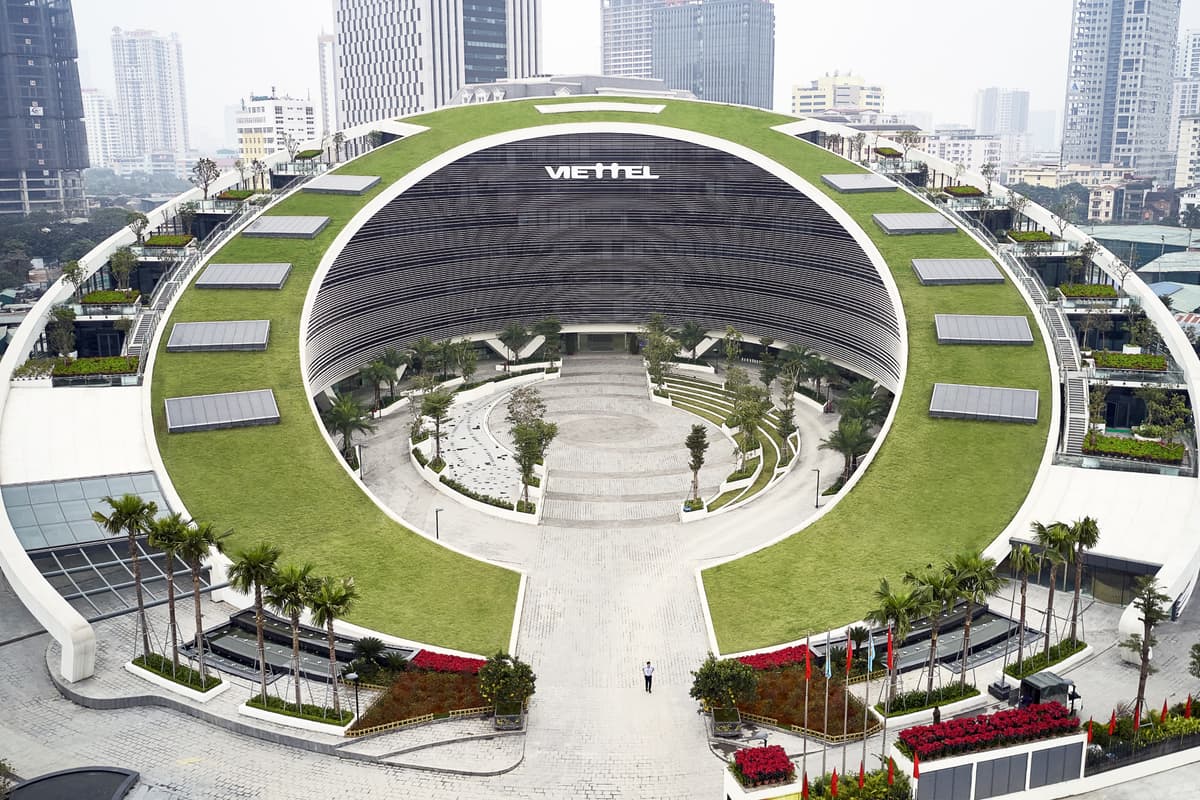
In a world facing the challenges of extreme weather events and climate instability, sustainable design emerges as a crucial trend shaping the architecture and urban planning landscape. In this episode of the Gensler Design Podcast, Host David Calkins engages with Juliette Morgan and Huang Yi Chun, leaders of Gensler’s Climate Action & Sustainability practice area, as they delve into the complexities of sustainable design and its urgent role in addressing the climate crisis.
What are some major sources of emissions in the built industry?
The built industry holds a significant share of global emissions, contrary to common beliefs. Buildings alone contribute nearly 40% of all annual global CO2 emissions, highlighting the importance of understanding the primary contributors within this sector to effectively tackle climate change. Carbon neutrality demands the elimination or offsetting of all CO2 emissions from the built environment, focusing on two main sources: operating carbon and embodied carbon. Presently, operating energy comprises 72% of overall energy consumption in buildings, with the remaining 28% attributed to embodied energy from building materials. Addressing this challenge requires a comprehensive approach, including enhancing energy efficiency, reducing embodied carbon in materials, and prioritising resilience in design. By acknowledging and tackling these pivotal factors, progress can be made towards a more sustainable built environment and mitigating the impacts of climate change.
What strategies has Gensler implemented to steer the industry towards achieving net-zero carbon?
Architects and designers, especially those at Gensler, play a crucial role in reducing emissions through their projects by embracing a holistic approach to sustainable design. With an extensive portfolio covering over 1.25 billion square feet annually, Gensler acknowledges its potential to positively influence the building industry. Through initiatives such as the Gensler Cities Climate Challenge (GC3) and strategic collaborations with industry stakeholders, the firm aims to lead the transition towards net-zero carbon buildings. By selecting green materials with reduced embodied carbon, educating both themselves and clients on sustainable practices, and meticulously measuring both operational and embodied carbon impacts, architects at Gensler ensure that every project contributes to carbon neutrality. Furthermore, by leveraging advanced technologies like gPlanet, all designers at Gensler can seamlessly integrate resilience analysis into the design process. With these comprehensive strategies, architects and designers at Gensler drive innovation and sustainability, establishing a precedent for the industry in the battle against climate change.
With the emergence of AI and other technologies, how can we leverage these tools to accelerate emission reduction efforts?
The rise of AI and other cutting-edge technologies offers significant potential to expedite efforts to reduce emissions in the built environment. Through AI utilisation, architects and designers can fine-tune building performance for enhanced energy efficiency by leveraging advanced data analytics to pinpoint inefficiencies and areas for enhancement. Moreover, AI-driven simulations empower designers to explore diverse design scenarios, aiding in the prioritisation of solutions with the lowest carbon footprint. Additionally, design technologies such as Gensler’s proprietary data-driven design tool, NFORM, streamline the integration of resilience analysis into the design process, ensuring buildings are not only energy-efficient but also resilient to forthcoming environmental challenges. The effective utilisation of these tools has the capacity to transform sustainable design methodologies, empowering architects and designers to wield substantial influence in combatting climate change and fostering a more sustainable future.

Listen to the full conversation on the Gensler Design Podcast. Thanks for tuning in!