
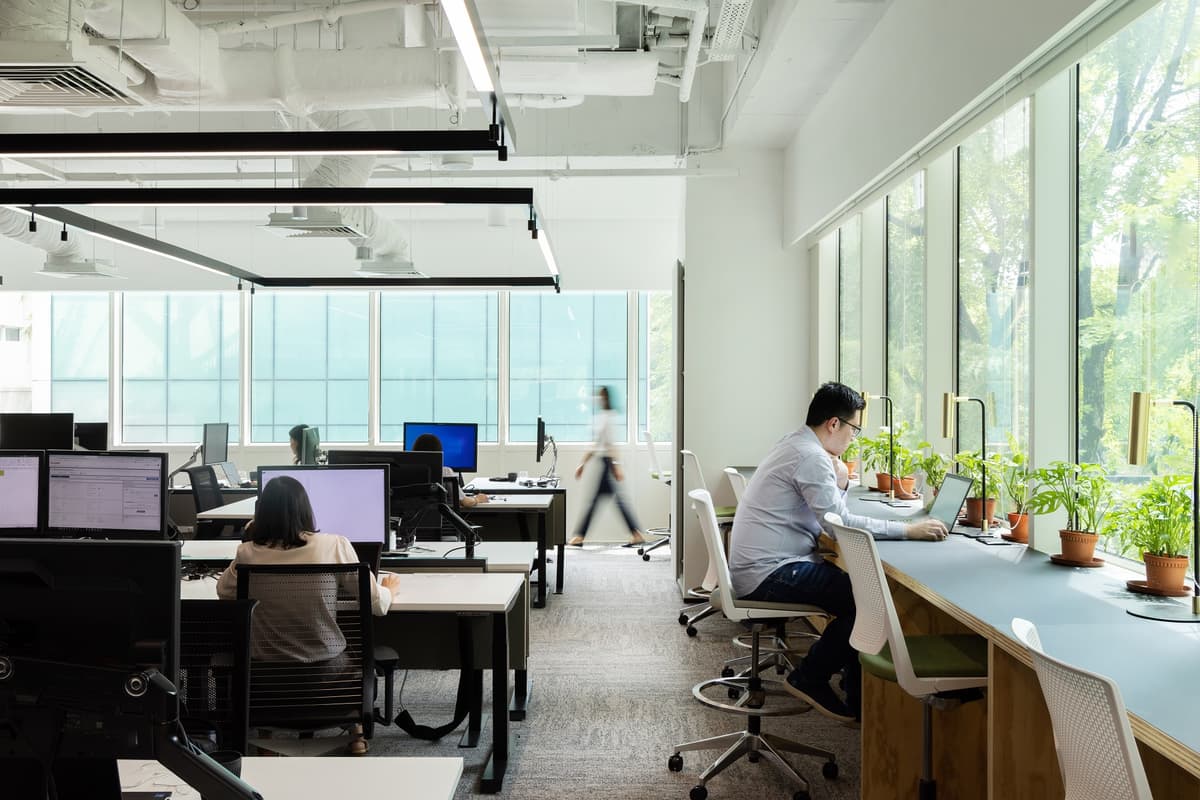
The COVID-19 pandemic has fundamentally changed the way we work, and as we navigate the new reality of hybrid work, workplace design has never been more important. In this episode of the Gensler Design Podcast, Host David Calkins and guest Nayan Parekh, Global Leader of Gensler's Work Sector, explore the latest insights and trends from workplace surveys and discuss their perspectives on the trends that have proven effective and those that have fallen short of expectations in the workplace design industry.
What workplace design trends emerged during the pandemic?
The COVID-19 pandemic has drastically changed the way we work. As a result, businesses around the world have been forced to adapt to new ways of working and managing their employees. Now that things are slowly returning to normal, it's important to take a step back and analyze which trends in the workplace have stood the test of time.
One trend that has emerged is the importance of workplace noise management. With the rise of virtual meetings and hybrid work, companies have had to prioritize creating a noise-free environment in the office. Amenity planning has also become a priority for many companies. With the shift to hybrid work, it's important for businesses to create a workplace that employees actually want to come into. Offering amenities and social events can help create a sense of community and bring people back into the office.
Choice has also become a crucial factor in the workplace as well. Giving employees the ability to choose when and where they work has been shown to increase engagement and productivity. Companies that offer flexible schedules and remote work options are more likely to attract and retain top talent.
What are some design trends that did not panned out as expected?
Many companies thought that collaboration would be the primary reason for employees to come into the office. As it turns out, the role of the office is much more nuanced, with employees coming in to focus on work, as well as team connection and collaboration. Moreover, the idea of serviced offices as a near-home solution in portfolio planning has not been as successful as predicted, as people prefer to come into the office for formal interactions and work from home for focused work.
Nonetheless, it is still too early to make definitive predictions about the future of work, as this is the first year of the "wait and watch" period. The pandemic has significantly impacted the way we work, and the current period can be considered an experiment to determine what works best for individuals and organizations.
Are there any design trends where the jury's still out?
It's still uncertain whether shared workspaces will be as effective in breaking team silos in a hybrid model as they were pre-COVID, as employees tend to sit with their teams when they come into the office. Additionally, companies are still trying to strike a balance between accommodating employees who want to work in the office all or most of the time and those who don't want to be in as much, which suggests having specific team days where the team knows they can all be in to create a sense of camaraderie and on-the-job learning. Finally, younger employees want more face-to-face learning and on-the-job training, which has resulted in many companies restructuring their talent development planning into three buckets: completely online, hybrid and face-to-face learning.
In summary, the pandemic has caused a significant shift in workplace design and management, and companies need to be mindful of emerging trends while also staying flexible and adaptable. By prioritizing employee needs and implementing effective workplace design strategies, businesses can create a workplace that is both productive and engaging.
A large part of this conversation was inspired by Gensler's Workplace Surveys. Access the latest reports here.

Listen to the full conversation on the Gensler Design Podcast. Thanks for tuning in!